Honest Solar

0Solar

0Solar is a goal, not a trick.

Solar should be explained clearly. A customer should understand the investment, the equipment, the expected production, the utility rules, the battery limitations, the incentives, and the remaining charges before making a decision.

ABC Solar Incorporated has been building solar systems since 2000. Our position is simple: solar is powerful enough to tell the truth about it.

0Solar does not mean free solar panels, free utility electricity, guaranteed bill elimination, or no-cost installation. It means designing toward lower long-term electricity cost through owned solar production.

There is no universal “free solar.”

Solar equipment has a cost. Engineering has a cost. Permits, labor, inspections, batteries, inverters, racking, monitoring, service, and maintenance all matter.

The honest solar conversation starts by saying the obvious: you are making an investment. The reason that investment can make sense is that the system produces real electricity with real value over time.
What honest solar means

Honest solar does not weaken the value of solar. It makes the value easier to trust. A good system should be explained in plain language before a customer signs anything.

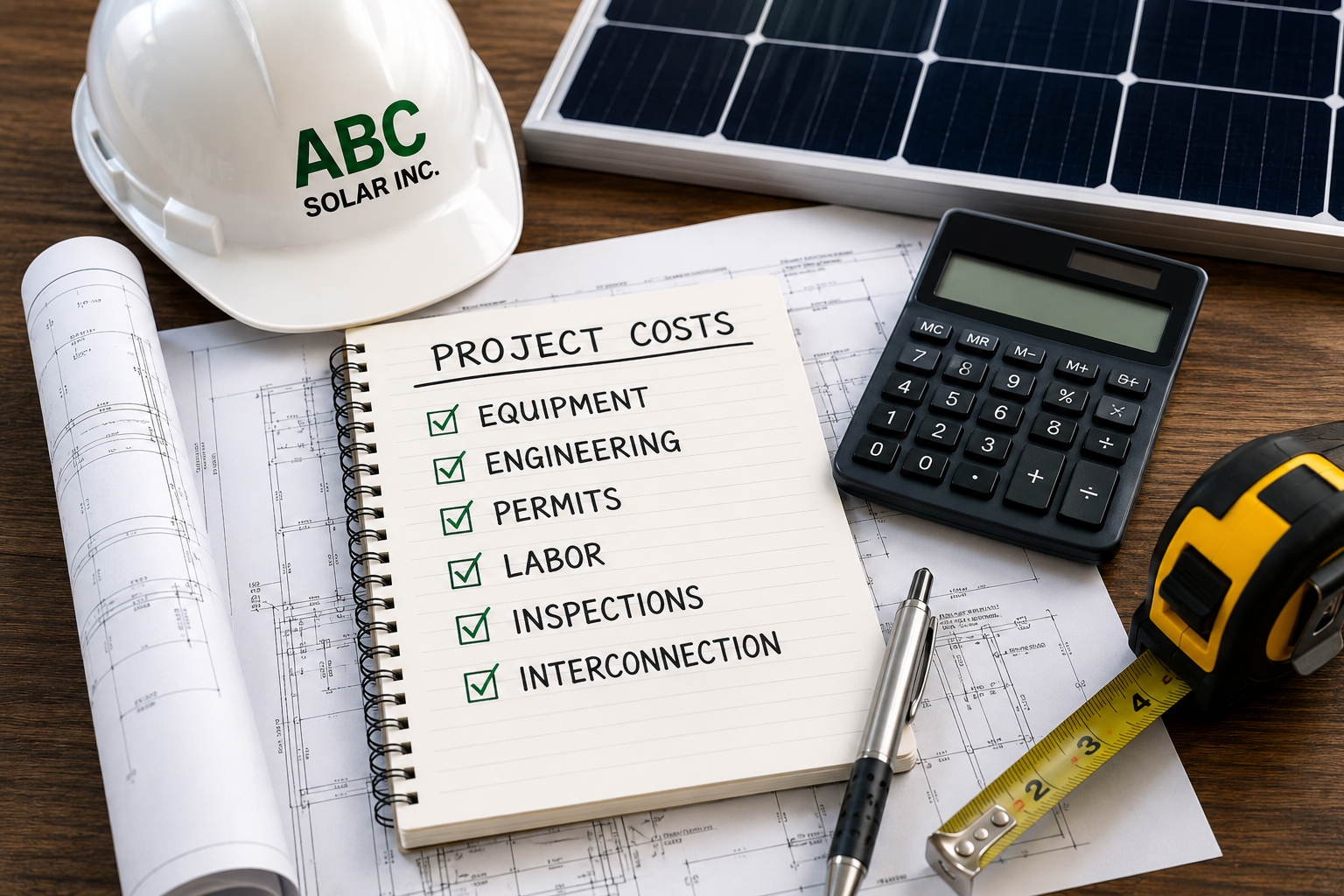
Solar equipment, plans, permits, and installation tools

Clear cost

The customer should know what the system costs, what is included, what is excluded, and whether batteries, panels, inverters, permits, interconnection, or service are part of the proposal.

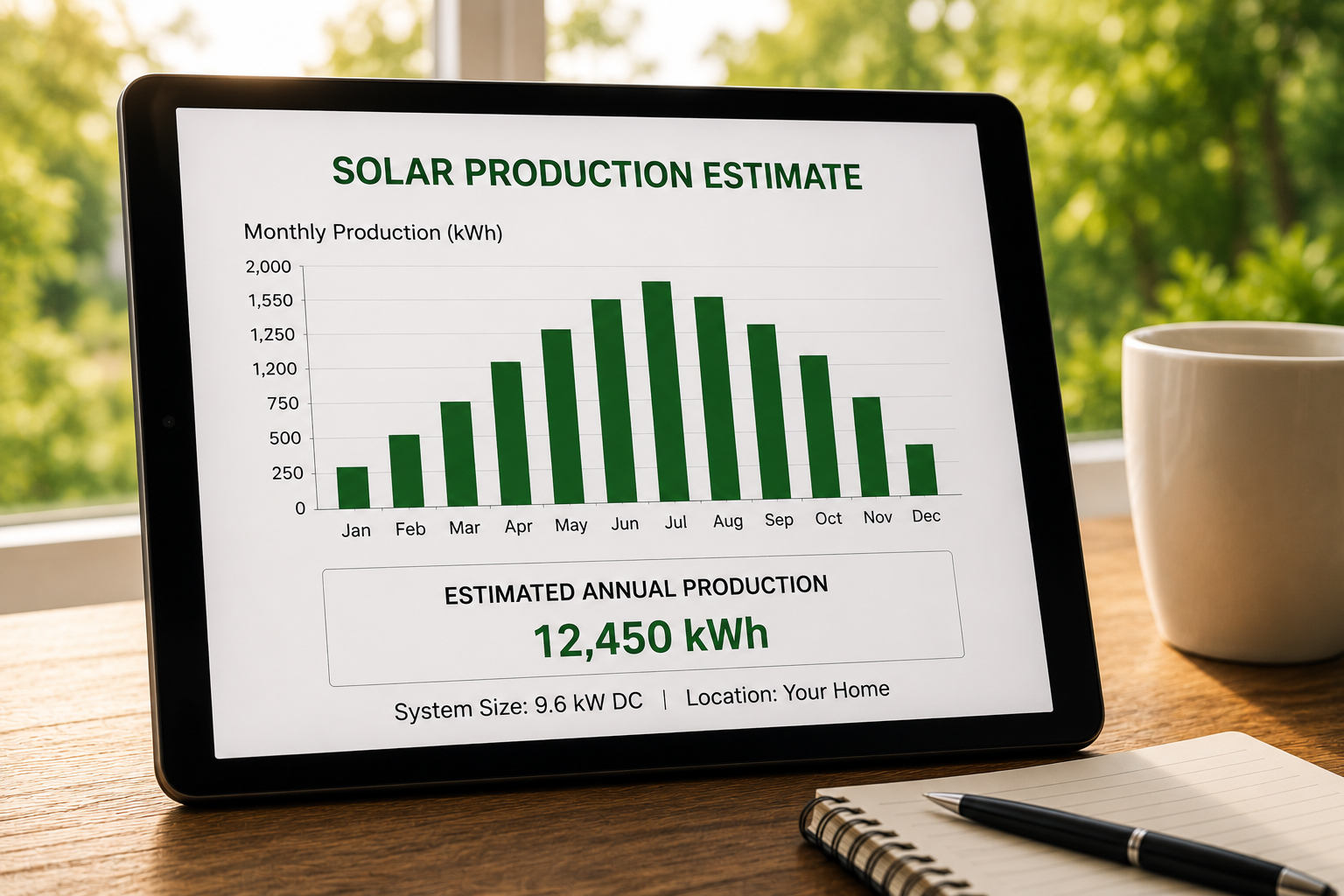
Solar production estimate with rooftop solar panels

Clear production

Solar production should be estimated from site conditions, roof orientation, shade, equipment, system size, and reasonable assumptions.

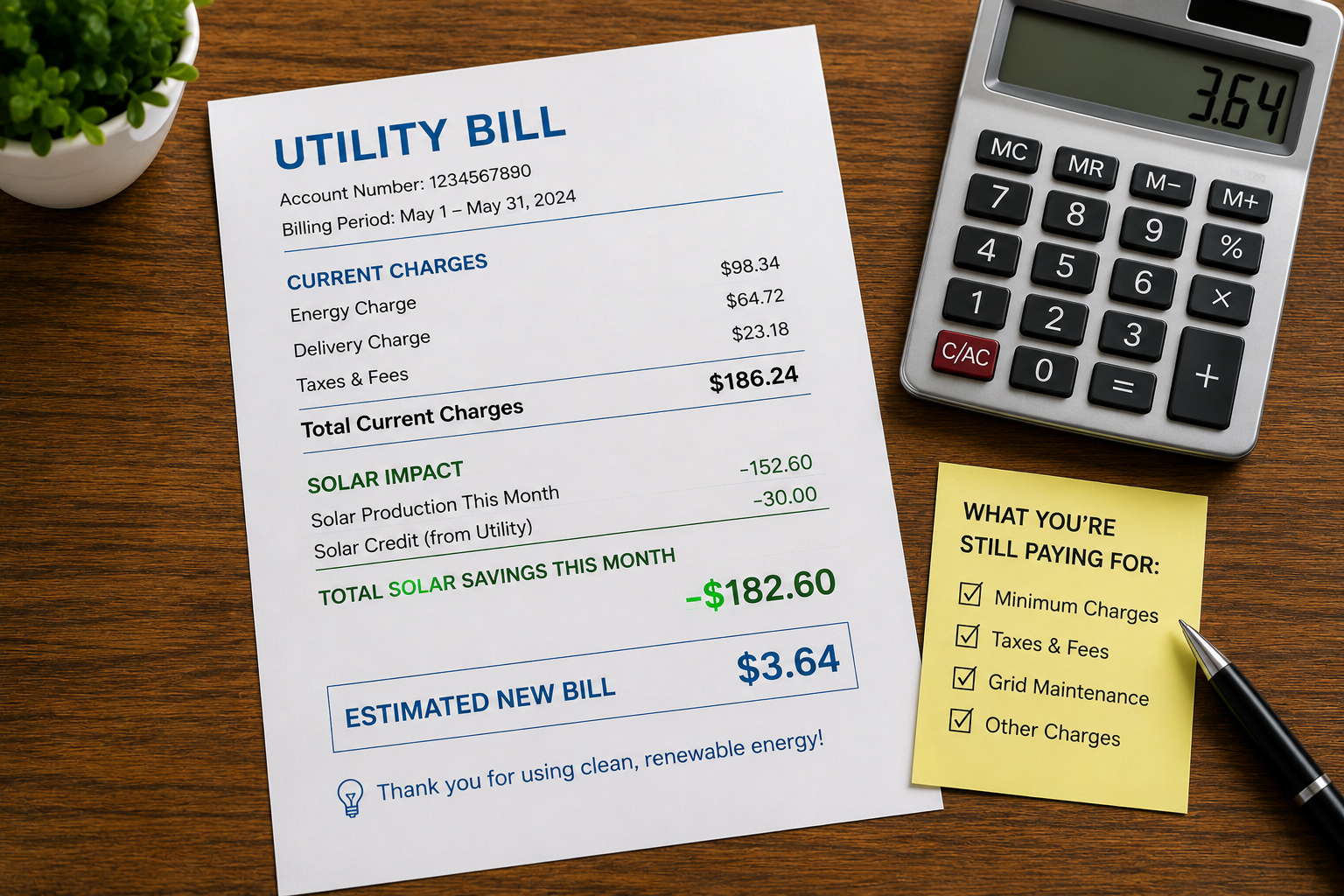
Utility bill and solar savings explanation

Clear utility reality

Solar can reduce purchased electricity, but utility bills may still include minimum charges, taxes, non-bypassable charges, demand charges, or other rate-specific fees.

0Solar does not mean “no bill for everyone.”

0Solar means moving toward the lowest practical cost of electricity from the kWh you produce. It is a design goal, not a universal guarantee.

01

Solar panels are not free.

A customer may pay cash, finance, lease, use a PPA, or combine solar with incentives. The structure matters and should be explained clearly.

02

Tax credits are not automatic cash.

Incentives may depend on tax liability, ownership structure, eligible equipment, installation date, domestic content rules, prevailing wage rules, and other legal requirements.

03

Utility rules matter.

Net metering, export credits, time-of-use rates, demand charges, minimum bills, interconnection rules, and standby charges can all affect the financial result.

04

Batteries have limits.

Battery backup depends on system design, battery size, inverter capability, selected loads, state of charge, weather, and outage duration.

05

Savings depend on usage.

A solar system should be matched to actual electricity use. A customer’s load profile, daytime consumption, evening demand, and seasonal needs all affect system value.

Solar is powerful enough to tell the truth about it.

That is the Honest Solar standard.

Bad solar language vs. honest solar language

Words matter. The wrong language creates unrealistic expectations. The right language helps customers make better decisions.

Bad solar language

“Free solar.” “No more electric bill.” “The government pays for everything.” “You automatically qualify.” “Battery backup powers the whole house forever.”

Honest solar language

“Solar is an investment.” “Your system can reduce purchased utility electricity.” “Incentives vary.” “Utility charges may remain.” “Backup depends on design.”

Questions every solar customer should ask

These questions help protect the customer and improve the design conversation.

System and production

What size is the system? What equipment is included? What annual kWh production is estimated? What assumptions were used for shade, orientation, degradation, weather, and system losses?

Utility bill impact

Which utility rate schedule is being used? What charges may remain? How are export credits treated? Are time-of-use rates, demand charges, minimum bills, or non-bypassable charges included?

Battery design

What loads will the battery support? How long can it support them? Does the system provide whole-home backup or selected-load backup? What happens during extended cloudy weather?

Financial assumptions

What incentives are assumed? Who owns the tax credits? Is the customer eligible to use them? What are the financing terms, escalation rates, dealer fees, or transfer obligations?

Warranties and service

What warranties apply to panels, inverters, batteries, racking, workmanship, roof penetrations, monitoring, and service response?

Long-term ownership

Who owns the system? What happens if the property is sold? What happens if the roof needs replacement? Can batteries be added later? Can the system be expanded?

Honest solar is better solar.

Start with the truth: solar is an investment. Then design the system so the customer can keep more of the value from the electricity they produce.